What Is Poha, and What Makes It Worth a Second Look
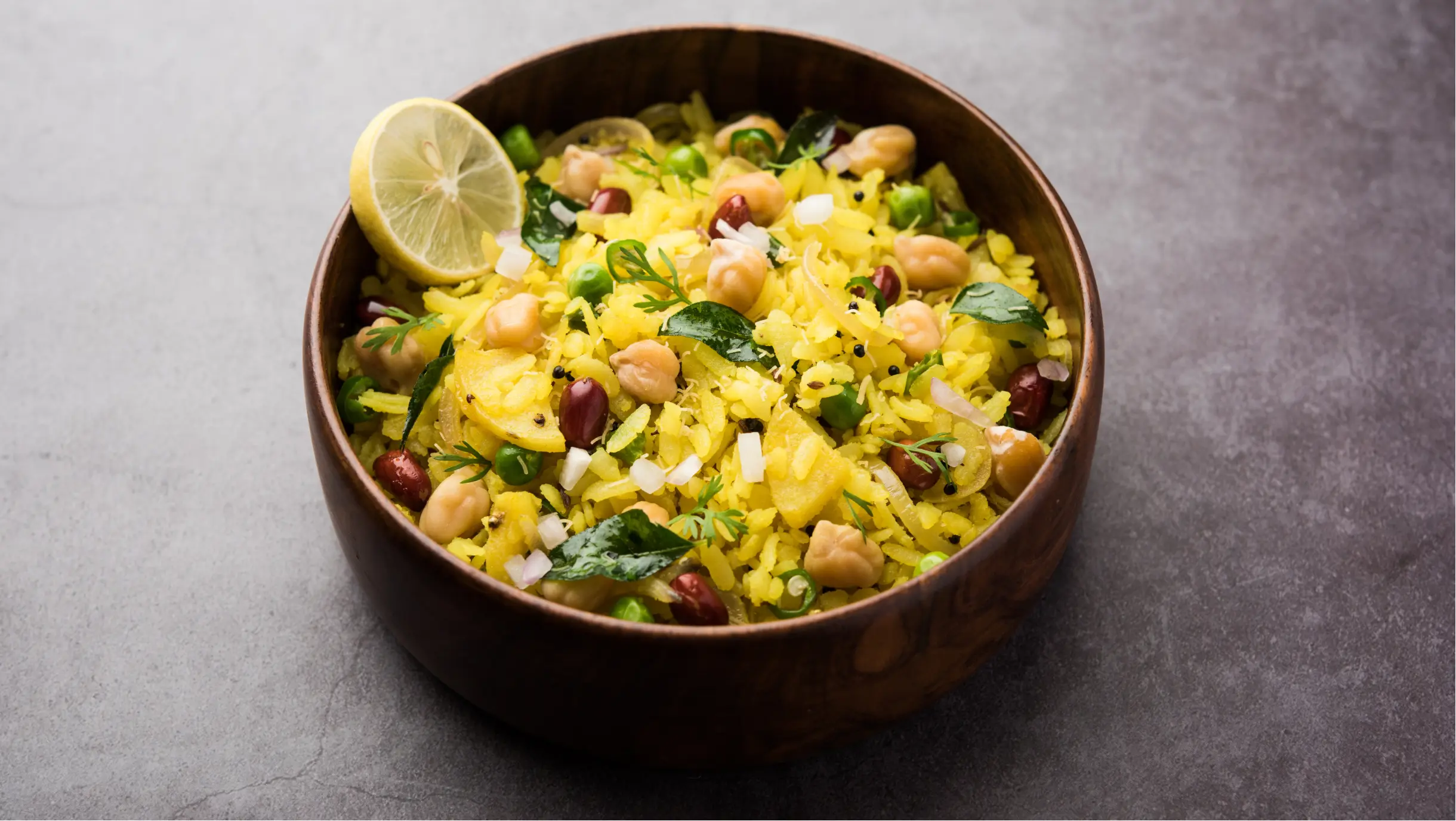
Poha is a light, flattened rice breakfast dish popular across India, made by pressing and drying rice into thin flakes. Yes, poha is healthy. It is low in calories, digests gently, and carries a meaningful amount of iron, which makes it one of the more nutritionally useful things sitting quietly in most Indian pantries.
You probably already know that. You have been making it for years, or watching someone make it, and you were not looking for a Western nutritionist to confirm it. What you might actually want is a clearer picture of what the numbers say and whether poha holds up when you look at it plainly, without the guilt that tends to attach itself to anything eaten quickly on a weekday morning.
Poha meaning in English is roughly "flattened rice" or "beaten rice," though neither translation quite captures how central it is to Indian breakfasts from Maharashtra to Odisha. It is made from paddy that has been parboiled, flattened between rollers, and dried. The result is a grain that cooks in minutes, absorbs flavor readily, and sits lightly in the stomach, which is a different profile from, say, a paratha or a plate of puri.
Whether poha is healthy or not depends, honestly, on what you add to it and how much you eat. On its own, it is a sound choice for a morning meal.
Poha Nutrition Facts: What 100 Grams Actually Contains
Per 100 grams, poha contains 110 calories, according to a study published in the International Journal of Nursing Education and Research (IJNER). That is a relatively modest figure for a grain-based dish, which partly explains why poha comes up so often when people are thinking about whether their breakfast is pulling its weight without weighing them down.
Poha calories sit low enough that a standard serving, roughly 150 to 200 grams before adding vegetables and tempering, remains a light meal by any reasonable measure. The 18 grams of carbohydrate is worth noting: it provides enough energy to carry you through a morning without the spike-and-crash pattern that comes with refined breakfast options.
Protein in poha is modest on its own. That is the honest part of the picture. If protein matters to you, pairing poha with a small bowl of curd or a handful of peanuts stirred in during cooking addresses the gap practically rather than requiring you to abandon the dish entirely.
Poha nutrition becomes considerably stronger when you account for what typically goes into it. Mustard seeds, curry leaves, turmeric, onion, green chili, sometimes potato, sometimes peas, often peanuts. Each addition shifts the nutritional profile in a useful direction. The dish is, in this sense, more of a platform than a fixed recipe, which is part of what makes it sensible for regular rotation.
Poha benefits extend to digestibility too. The flattening and parboiling process makes it easier on the stomach than whole-grain rice eaten in the same quantity, and its low fat content means it does not feel heavy when eaten mid-morning or as a light lunch.
Why Poha's Iron Content Stands Out for Indian Diets
The 6.1mg of iron per 100 grams, drawn from the same IJNER study, is the number that deserves a moment. Iron deficiency is one of the most common nutritional gaps among women in India, and it is often framed as a problem that requires supplements or a complete dietary overhaul. Poha offers a quieter path: a breakfast most families already eat, already enjoy, and can serve without any intervention from a nutrition plan.
For context, the recommended dietary allowance for iron for adult women in India is around 19mg per day. A generous serving of poha gets you meaningfully toward that figure, especially if you are cooking it with ingredients that support absorption, like tomatoes or lemon juice squeezed in at the end.
Poha is good for iron deficiency precisely because it delivers iron in a form that is already embedded in a meal people want to eat. That is different from taking a supplement you remember three times a week. The food you actually make on a Tuesday morning matters more, nutritionally, than the ideal you plan on Sunday.
Red poha vs white poha is worth a brief mention here. Red poha, made from unpolished red rice, retains more of the outer bran layer and tends to carry a slightly higher micronutrient load, including iron, compared to standard white poha. Both are sound choices, and if red poha is available in your market, it is a reasonable swap with no change to how you cook.
Is Poha Good for Weight Loss? What the Numbers Actually Suggest
At 110 calories per 100 grams and 18 grams of carbohydrate, poha fits comfortably into a morning meal for someone managing their weight, as long as the portion stays sensible and the additions do not tip the balance. It is not a diet food in the way that label gets used, but it is genuinely light and, more importantly, it satisfies without leaving you hungry again by ten in the morning.
That last part matters more than the calorie count. A breakfast that keeps you steady through the morning is doing more useful work than a smaller breakfast that sends you toward a biscuit before lunch. Poha, especially with peanuts and onion, has enough texture and mild fat content to slow digestion enough that satiety holds.
The calorie figure also responds directly to what you cook it with. A plain poha preparation with minimal oil stays close to that 110-calorie baseline per 100 grams. Add a generous pour of oil and a fried accompaniment and the number shifts considerably. The dish itself is not the variable. Your hand on the oil bottle is.
One honest caveat: poha is predominantly a carbohydrate. For someone specifically trying to limit carbohydrate intake rather than calories overall, portion size deserves attention. A standard single-person serving runs around 150 to 200 grams uncooked, which puts the carbohydrate contribution at roughly 27 to 36 grams. That is not a reason to avoid it, but it is useful information for someone building a fuller picture of their daily intake.
Red Poha vs. White Poha: A Straightforward Comparison
Both are made from flattened, parboiled rice. The difference is upstream: white poha starts from milled, polished white rice, while red poha uses unpolished red rice, which retains more of its outer bran layer through the flattening process. That bran layer is where most of the fiber and micronutrients sit, so red poha ends up nutritionally denser, if not dramatically so.
The taste difference is subtle. Red poha has a slightly earthier, nuttier quality; white poha is more neutral and absorbs tempering flavors a little more readily. Neither requires a different cooking method.
If red poha is easy to find where you shop, it is a reasonable preference. But white poha, prepared well, is still a sound nutritional choice. The gap between the two is real but not large enough to justify any anxiety about which one sits in your pantry.
How to Make Poha Healthier: Small Additions That Shift the Balance
The base recipe is already doing something right. What most everyday poha preparations can do even better is build on the iron story and bring in a little more protein, and neither adjustment requires changing the dish in any way that would make it unrecognizable at the table.
The practical additions worth working in regularly:
- Peanuts stirred in during tempering add around 2 to 3 grams of protein per tablespoon, along with healthy fats that help satiety. Most Maharashtrian recipes already include them, and they take thirty seconds.
- A squeeze of lemon juice added just before serving is one of the quieter wins in everyday Indian cooking. Vitamin C significantly improves non-heme iron absorption, which means the 6.1mg of iron in poha becomes more available to the body when citrus is present. Lime works just as well.
- Vegetables folded in while cooking, green peas, grated carrot, finely chopped capsicum, add fiber and micronutrients with almost no effort. Frozen peas especially: they go in from the bag and are ready before the poha is.
- Curd on the side, even a small bowl, brings a useful protein contribution and the probiotics that support gut health, which matters for a meal eaten first thing in the morning on a digestive system still waking up.
None of this requires a new recipe. Poha absorbs the additions without resisting them, which is part of what makes it such a reliable base for a balanced Indian breakfast. The dish you already make on a weekday, with one or two small adjustments, can carry meaningfully more nutritional weight than it does on its own.
What the additions do, collectively, is answer the question that sits under most breakfast decisions in Indian households: is this actually enough to sustain us, or is it just filling a plate. Poha, built out thoughtfully, does both.
Common Questions About Poha, Answered Plainly
Planning the Rest of the Week Around What You Already Know
Knowing that poha is a reasonable, nourishing breakfast is useful. The harder question is what comes after it.
Most people who feel good about one meal still find themselves at a loss by Wednesday. Not because they lack information about individual dishes, but because building a week's worth of meals that fit together, use up what is actually in the pantry, and stay within what the family will eat requires a kind of sustained attention that is genuinely difficult alongside everything else a day asks for.
That is the problem Frep was built around. The app takes what you have at home, including staples like poha, and builds a weekly meal plan that accounts for Indian ingredients, regional preferences, and the reality of a busy household rather than a hypothetical one. It is not generating a Western diet plan with a few substitutions. It is working with the actual food that sits in Indian kitchens.
The pantry tracker and grocery list are free to use from the start, which makes it a low-effort place to begin even if you are not ready to commit to a full subscription. The 14-day trial gives you access to everything else.
One good breakfast is a reasonable starting point. Most of us want more than one thing to feel sorted, though, and that is where individual nutritional knowledge tends to run out of road.