Table of contents
There is a question that turns up somewhere around 6 PM in a lot of Indian homes. Dinner will get made. Dal will be tempered, sabzi will be cooked, rotis will be rolled. The harder question is whether the meal is actually balanced.
Home-cooked does not automatically mean nutritionally balanced. A plate can be entirely homemade and still end up being mostly rice or roti, with a small bowl of dal and a token spoonful of sabzi squeezed in somewhere on the side.
The good news is that eating better does not require turning dinner into a nutrition project.
You do not need to weigh your dal, count every roti, or replace the food your family already loves. For most Indian meals, the easier starting point is simply looking at how much space each part of the meal gets on the plate.
And once you understand that, the bigger challenge is not knowing what to eat. It is figuring out aaj kya banega every single day while trying to keep that balance going.
What a Balanced Indian Plate Actually Looks Like
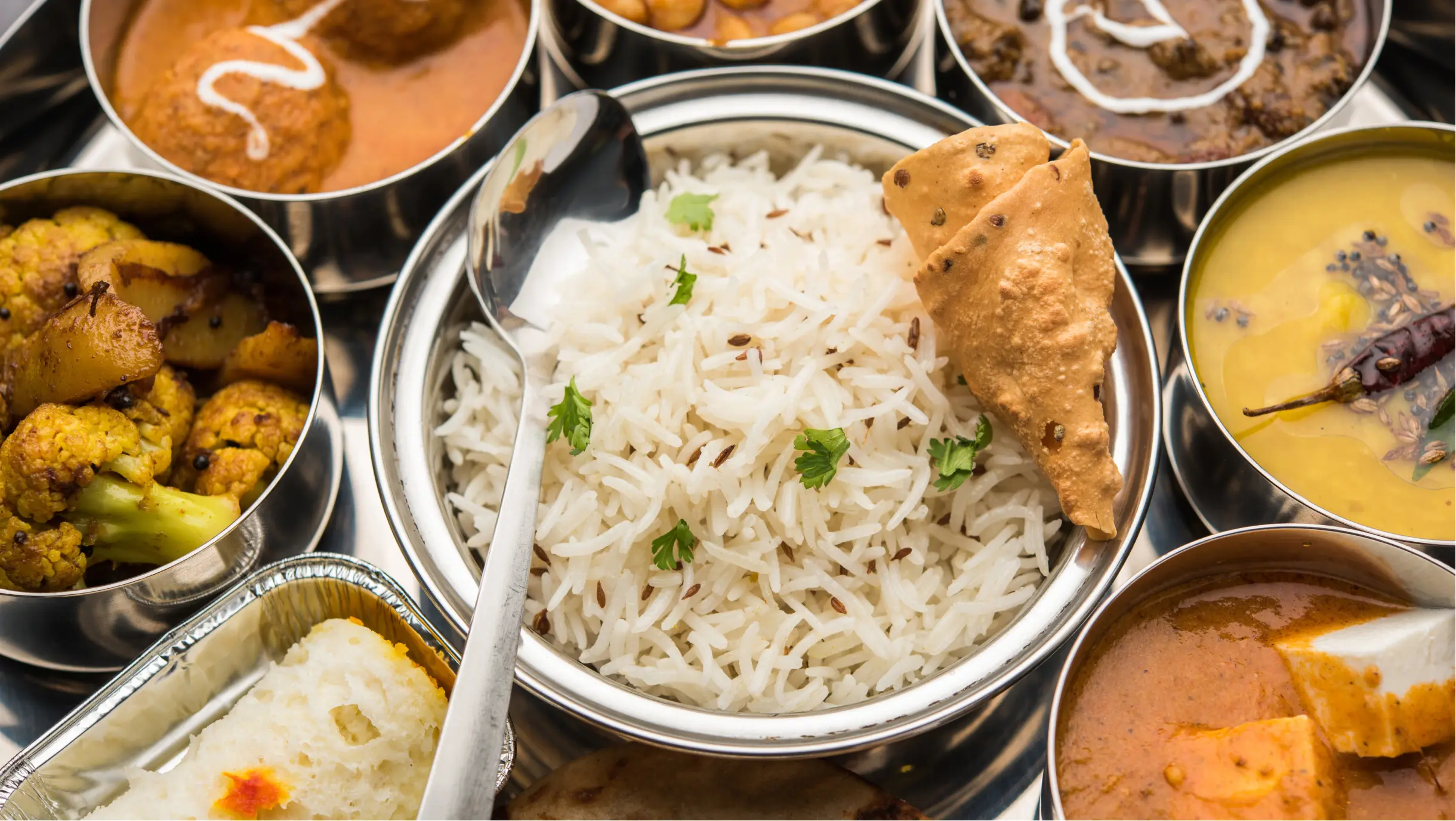
Picture the plate in four parts. Half goes to vegetables and salad. One quarter to a protein-rich food, dal, chana, rajma, paneer, or eggs. One quarter to rice, roti, millet, or another cereal. Curd or chaas alongside.
This is not a prescription. Age, health conditions, and activity levels shift what any one person actually needs. Think of it as a visual cue, something you can glance at before serving rather than calculate after.
The shift that matters most is this: dal and sabzi should not be supporting characters while the cereal does all the talking.
Why Indian Meals Can Become Cereal-Heavy Without Anyone Realising
Rice and roti are deeply embedded in how we eat, and there is nothing wrong with either. The issue is proportion.
A large 2025 study published in Nature Medicine, based on dietary data from more than 18,000 adults in India, found that carbohydrates contributed about 62.3% of total energy intake, while protein contributed around 12%. Refined cereals alone accounted for 28.5% of energy.
That does not make Indian food unhealthy. It means that, at a population level, our plates tend to be heavily cereal-led, and you can usually see that pattern at home: two or three rotis, a little sabzi, a generous mound of rice, a small katori of dal.
The easiest fix usually does not involve removing anything familiar.
Instead of two rotis with a little dal and a little sabzi, try one or two rotis with a generous serving of both. Same dinner. Different balance.
You Probably Already Cook Most of What You Need
Nutrition advice starts to feel exhausting when it sounds like rebuilding the kitchen from scratch. Most households do not need to do that.
Indian cooking already gives us cereals, pulses, vegetables, dairy, and protein combinations across the week. The question is whether each gets enough room on the plate.
Cereals and grains
Whole-wheat roti, rice, jowar, bajra, ragi, oats, and poha are already familiar. The 2024 National Institute of Nutrition dietary guidelines recommend getting at least half of cereal and millet intake from whole grains.
White rice does not have to disappear. Rotating more whole-grain options through the week, jowar bhakri one evening, bajra roti another, is variety, not food punishment.
Protein
This is the part worth consciously planning, because it is the easiest to shortchange. Indian kitchens already have plenty to work with.
Cereals and pulses complement each other nutritionally, which is why dal-roti, idli-sambar, and rajma-rice work so naturally. Chicken and fish do the same job efficiently in non-vegetarian households. The key is making sure the protein component is substantial enough to count as part of the meal, not two spoonfuls beside a large plate of rice.
Vegetables
The visual check here is simple. Is sabzi taking up meaningful space on the plate, or is it the thing everyone finishes in three bites?
Building vegetables into familiar dishes helps more than adding a separate side. Sambar, khichdi, pulao, poha, dal, paratha fillings all carry vegetables naturally, so the meal does not feel like it has acquired a compulsory healthy item on the side.
Curd and chaas
Curd contributes protein and calcium and works alongside almost everything, paratha, rice, a simple dal. Chaas works just as well for households where a full bowl feels like too much.
Can a Balanced Plate Help With Weight Management?
For people trying to manage their weight, increasing the share of vegetables and protein while keeping cereal portions appropriate is a reasonable place to start.
But the plate framework is best treated as a practical way to structure meals, not a personalised prescription. If you have a medical condition, specific dietary requirements, or significant weight-management goals, a qualified nutrition professional is the more appropriate place to go.
The Hard Part Is Not One Balanced Dinner
You can look at a picture of a balanced plate and understand it in thirty seconds.
Then Tuesday happens.
There is half a packet of beans in the fridge, paneer expiring tomorrow, one person wanting dosa, another wanting roti, and someone asking "Aaj kya banega?" again. Healthy eating usually becomes difficult not because families do not know vegetables are good for them, but because someone still has to decide what to cook, remember what is already in the kitchen, maintain enough variety through the week, and make sure yesterday's dal does not quietly become a forgotten experiment.
Knowing what a balanced plate looks like solves one part of that problem.
Planning enough balanced meals to get through an actual week is the other part, and it is much closer to the problem most households are living with day to day.
Making balance easier to repeat
The goal is not one Instagram-perfect thali. It is making reasonably balanced home food easier to repeat on regular weekdays.
Look at tonight's dinner. You probably do not need completely different food. Maybe the sabzi needs more room, or the dal needs to stop being an afterthought, or the cereal could give a little space to something else. Small adjustments hold better than rebuilding the entire family menu from scratch.
Once you know what the plate needs, the real work is making that balance easier to plan throughout the week. That is where Frep comes in. Frep helps Indian households decide what to cook by planning meals around their preferences, pantry, and everyday routines, so you spend less time asking aaj kya banega and more time simply getting dinner on the table.
Eating well should not require a nutrition spreadsheet every evening.
Practical Questions About Building a Balanced Indian Plate
A Simple Way to Start Without Overhauling Everything at Once
The easiest first move is the one that does not feel like a move at all.
Look at your plate tonight, not to grade it, but to notice where the space is going. If roti and rice together fill more than a third of the plate, there is an easy adjustment. Let the dal portion grow. Build the sabzi out to a full serving rather than a spoonful at the side.
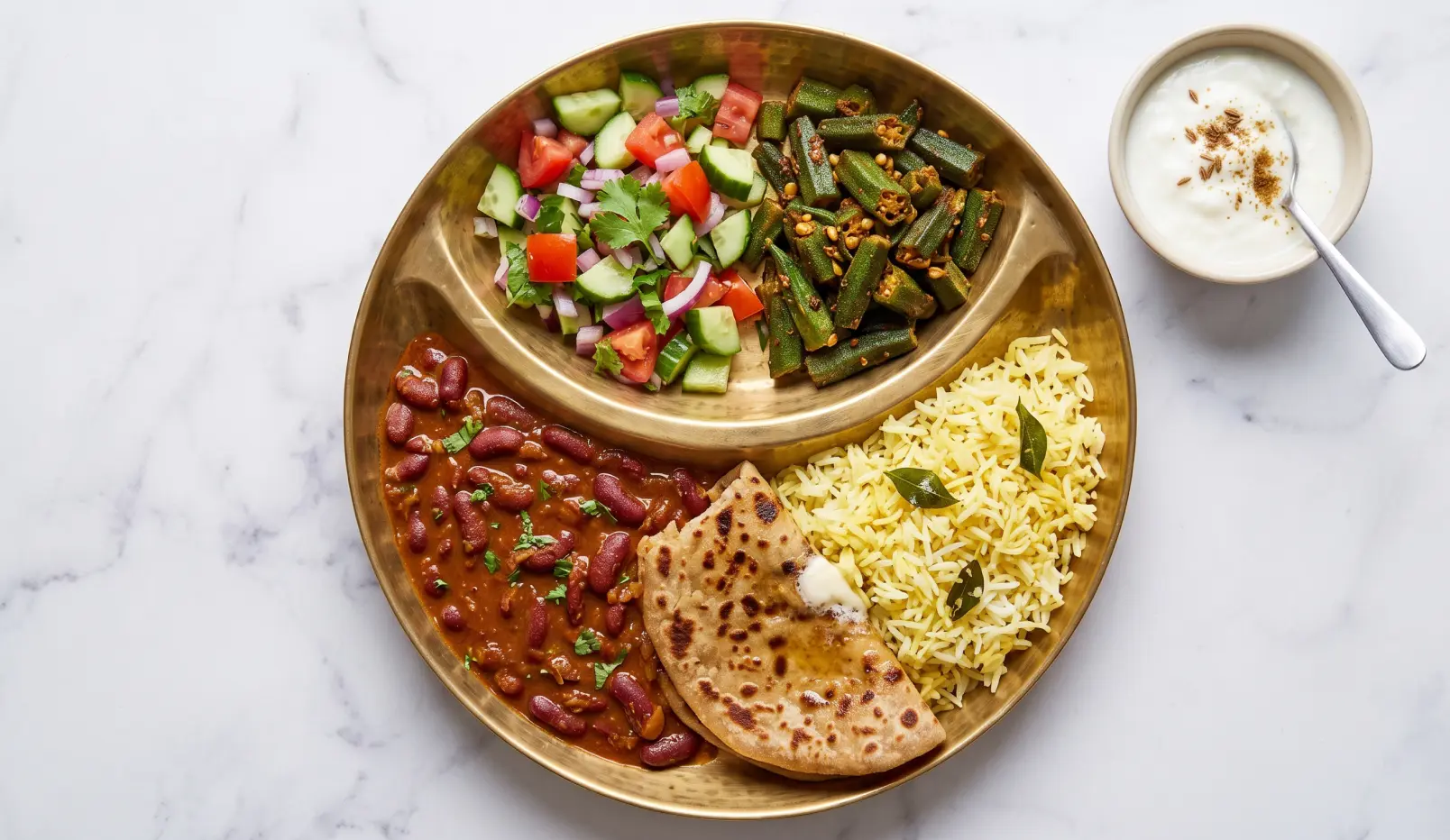
That is genuinely it, for a start. One adjustment, repeated a few times, begins to shift the pattern. Protein intake at 12% of daily energy nationally is not a problem that needs a supplement; it needs dal to be planned with intention rather than added last. The ingredients are not missing from Indian kitchens. The visibility is.
The harder part is sustaining the pattern across a week, across different meals for different family members, across days when the pantry is half-empty and decision fatigue arrives before the cooking does. That is where planning matters more than knowledge. Knowing what a healthy Indian plate looks like is useful. Having a weekly plan that already reflects that structure, built around what is in your kitchen, regional preferences included, is what removes the daily reinvention problem.
A balanced Indian diet plate is not a fixed image. It shifts by region, by season, by what the family will actually eat on a Tuesday evening. What holds steady is the proportion logic: vegetables and protein given room, whole grains part of the cereal mix, curd at the side by default. Frep's weekly meal plans are built around exactly that logic, for Indian kitchens, with pantry-based suggestions so the plan meets whatever is already on your shelf.
The plate you make tonight does not need to be perfect. It just needs to be slightly more intentional than yesterday's, and that is a much smaller distance than the anxiety makes it feel.