
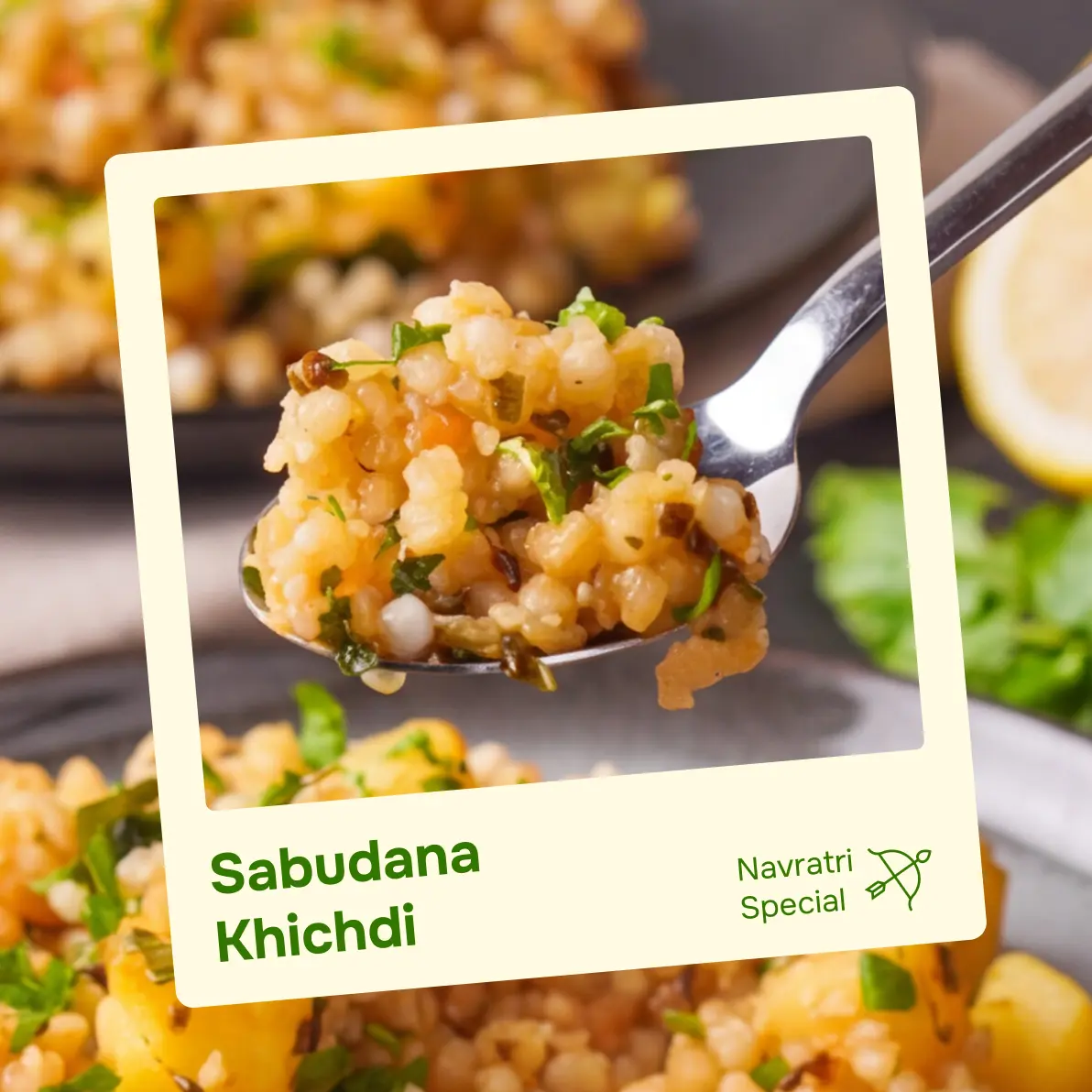
Sabudana Khichdi
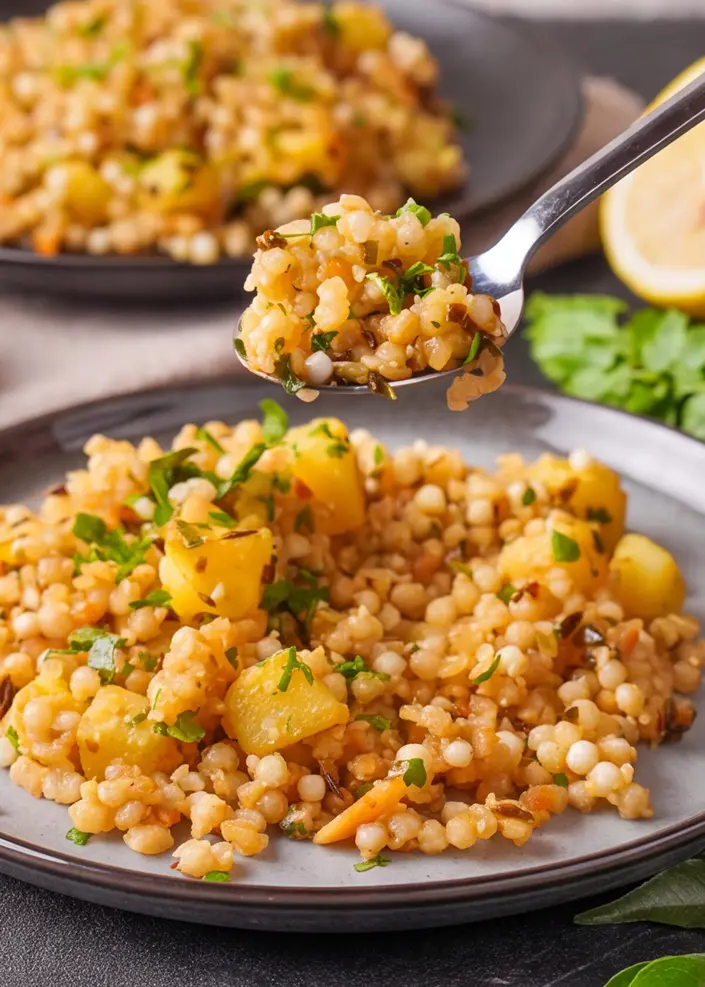
Glossy, separate pearls, soft potato, crushed peanuts and a squeeze of lemon that wakes the whole bowl up.




Ingredients
Tap an ingredient to check it off as you prep.

Cooking steps
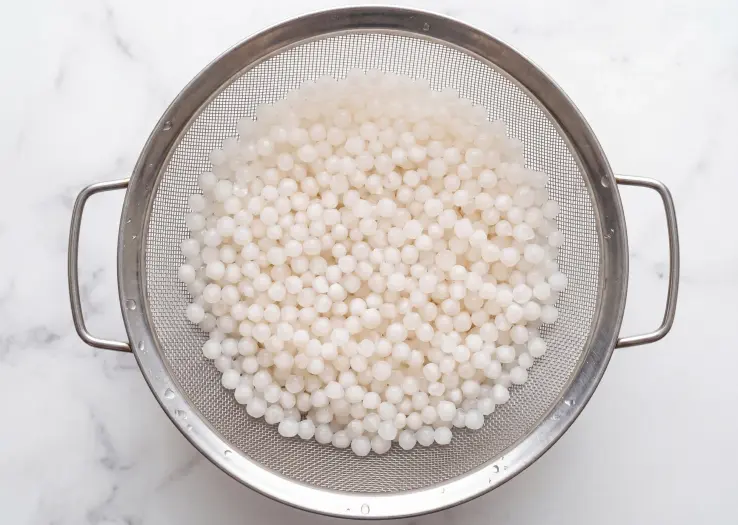
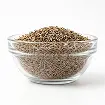
Wash the sabudana and soak it in enough water for 4 to 5 hours or overnight. Using a colander, drain the excess water completely, any residual moisture will cause the pearls to clump while cooking.
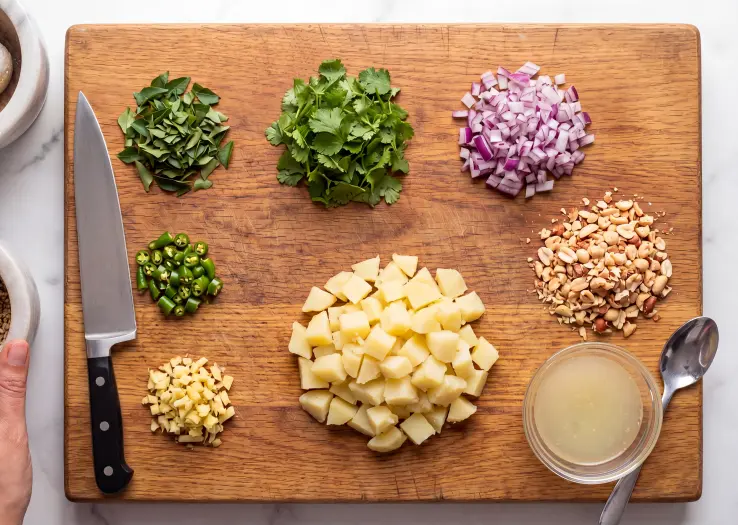
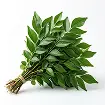
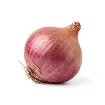
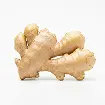
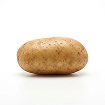
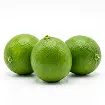
Finely chop the curry leaves, onion, green chillies, ginger, and potato. Squeeze the juice from the lemon and coarsely pound the roasted peanuts. Chop the coriander leaves.
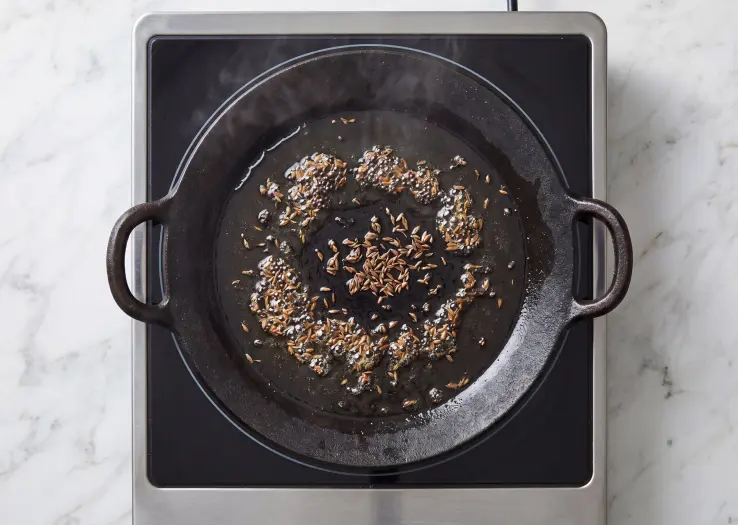
Heat the oil in a large pan over medium heat. Add the mustard seeds and cumin seeds and let them crackle.
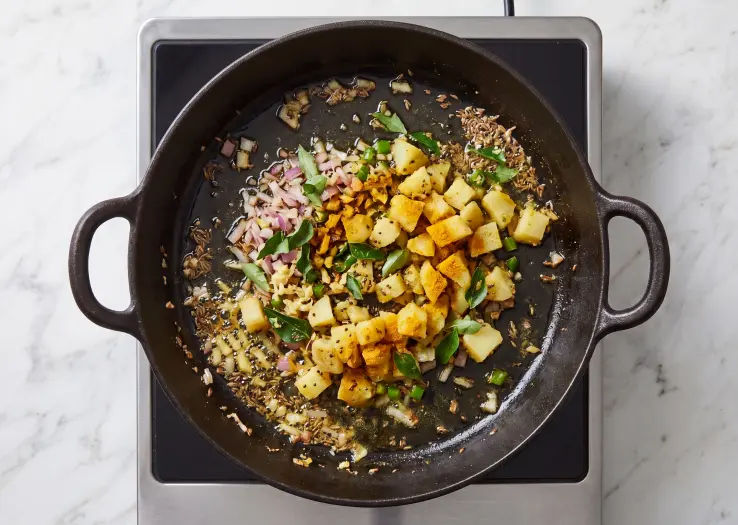
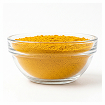
Stir in the curry leaves, onion, green chillies, ginger, potato, and turmeric powder. Cover the pan and cook until the potato is soft and cooked through. You can also use pre-boiled potato if preferred.
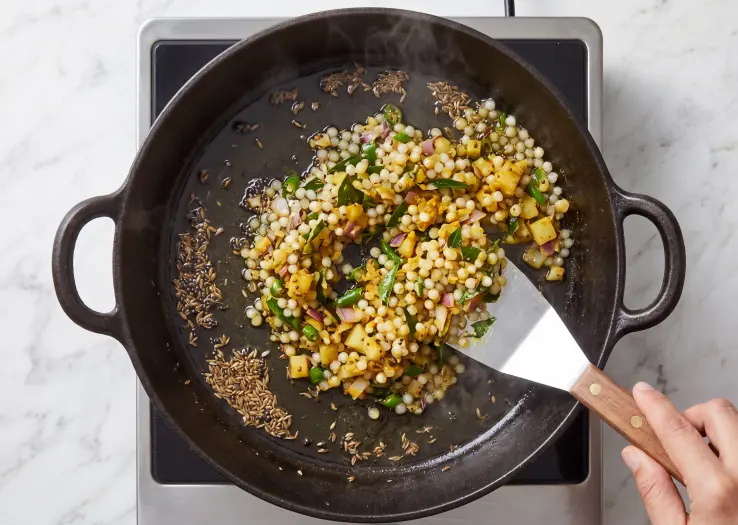
Once the potato is cooked, stir in the salt and drained sabudana. Mix well to combine all the ingredients, then cover and simmer on low heat for about 5 minutes, or until the sabudana turns translucent and is soft but not mushy. Stir occasionally; if needed, sprinkle a little water, do not add more than a sprinkle.
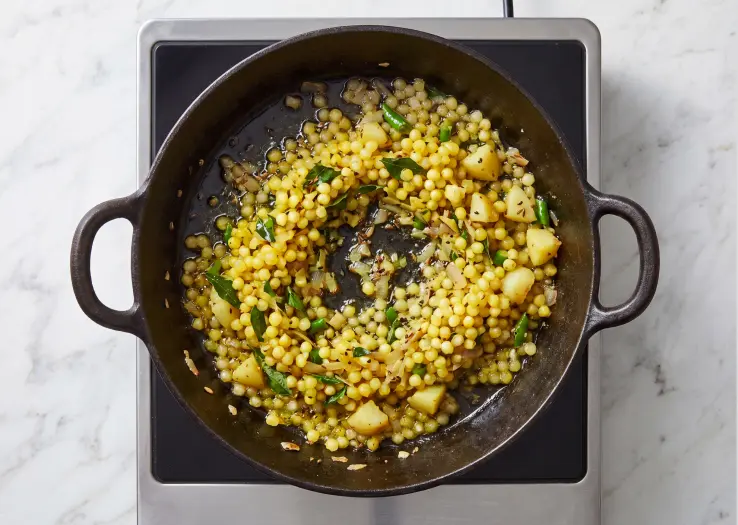
To check doneness, the sabudana pearls should have changed from white to translucent, and each ball should be separate rather than clumped.
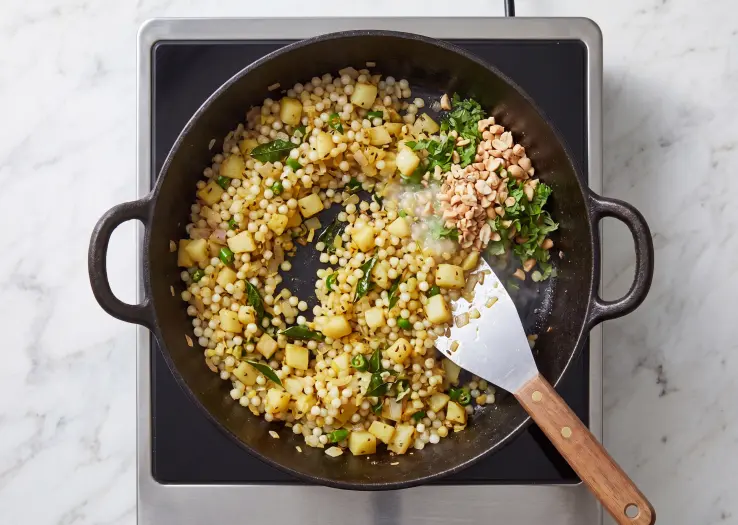
Stir in the crushed peanuts, lemon juice, and coriander leaves.
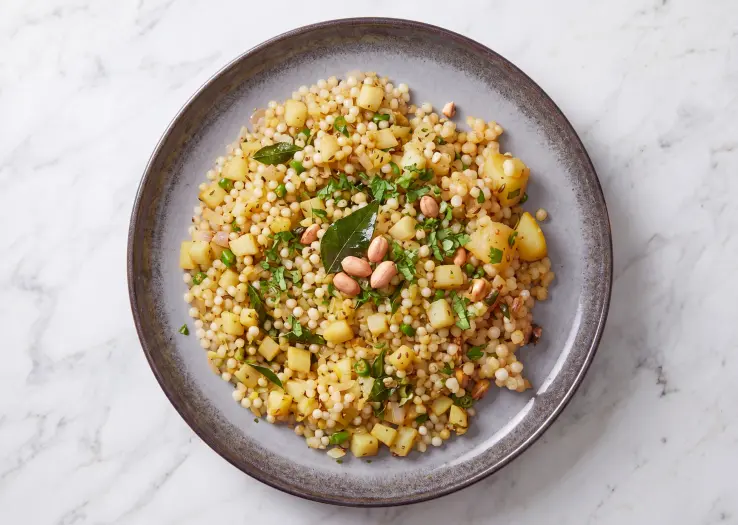
Turn off the heat, cover the pan, and allow the khichdi to rest for 5 minutes before serving hot.

Take this recipe with you


Sabudana that stays separate, not sticky

- Gluey khichdi is a water problem every single time. Either the pearls sat too long in the soak, or they went into the pan still wet. Drain in a colander until nothing drips.
- Press one pearl between your thumb and finger before you start cooking. If it crushes to a soft powder with no hard white speck in the middle, the soak has done its job.
- Five minutes, covered, on low. The moment the pearls go from white to clear, they are done.
- If it looks dry in the pan, flick water on with your fingers. Pouring from a glass is how a pot of separate pearls becomes one sticky lump.

- Fasting-day version: For a proper vrat plate, leave out the onion, the curry leaves and the haldi. Jeera, green chili, potato, peanuts and lemon carry the whole thing, so it does not taste like a compromise, just a quieter, cleaner version.
- Boiled potato for raw: Use a pre-boiled potato instead of raw, diced small and stirred in right after the tadka. You lose the covered wait for the potato to soften and breakfast lands a good bit sooner.
- No peanuts: Coarsely crushed roasted cashews or roasted chana dal do the same job. Chana dal stays crisper in the hot khichdi; cashews go softer and richer.

- The real make-ahead here is the soak, not the dish. Soaked and drained sabudana keeps in the fridge overnight, so you do the waiting the night before and breakfast is half an hour of actual cooking.
- Leftovers firm up as they cool, and that is not a fault. Warm them in a pan on low with a lid and a sprinkle of water and the pearls soften straight back.
- Skip the microwave. It heats the pearls unevenly and you end up with hot sticky patches sitting next to cold ones.
Frequently Asked Questions
Can I make this for vrat or fasting days?
Yes, with a small edit. This version has onion, curry leaves and haldi, which many households skip on fasting days. Leave those out and keep the sabudana, potato, jeera, green chili, peanuts and lemon, and you have a proper vrat plate.
How do I know the soak is right?
Pick up one pearl and press it between your thumb and finger. If it crushes to a soft powder with no hard white speck in the middle, it is ready. If there is any grit left, give it more time before you start cooking.
What can I use instead of peanuts?
Coarsely crushed roasted cashews or roasted chana dal give you the same crunch and hold up well in the hot khichdi. If you are cooking for an allergy, wipe the pan first and make sure the roasted nuts you use were packed separately.
Why does my sabudana turn sticky and gluey?
Almost always too much water. Either the pearls sat in extra water while soaking and got waterlogged, or they went into the pan still wet. Drain properly in a colander, and if the khichdi looks dry while cooking, sprinkle water, never pour it.
Why do the pearls clump into lumps in the pan?
Residual moisture is the usual reason, so drain until nothing drips. Heat also matters: keep it on low and covered for those five minutes, and stir occasionally instead of mashing. Done right, each pearl stays separate and translucent.